Hiển thị các bài đăng có nhãn Khachaturian Aram. Hiển thị tất cả bài đăng

Thứ Bảy, 21 tháng 9, 2013

Khachaturian: Symphony No.2, Gayaneh Suite


Aram Khachaturian was one of the most popular composers of the Soviet period of Russian history, successfully managing to combine the folk music of his native Armenia with the more formal Russian musical tradition as represented by Rimsky-Korsakov. Born in 1903, he showed early signs of a love of music, but his formal training did not begin until 1922, when he was admitted to the famous Gnessin Institute in Moscow (his family having moved there the previous year) and continued at the Moscow Conservatory with the eminent composer Myaskovsky.


The first major work of Khachaturian to be performed was his Symphony No. 1 (1934). International acclaim greeted his rumbustious Piano Concerto of 1936, the success of which was quickly duplicated with the Violin Concerto of 1940, and throughout the 1940s Khachaturian composed many successful works, such as the ballet Gayaneh with its famous Sabre Dance (1942), his Symphony No. 2 (1943) and Cello Concerto (1946).

His Symphony 2 is perhaps darker--in both mood and orchestral color--than his other symphonies; but then it was written in 1943 in the midst of World War II and Stalin's ongoing purges of the Soviet bureaucracy. However, works such as Gayneh almost guaranteed that Khachaturian would stay out of jail.

Thứ Tư, 24 tháng 4, 2013

Kabalevsky & Khachaturian: Cello Concertos


Mats Lidström is that rare thing, an original musician. The sheer mercurial energy which drives his performances can be both engaging and disturbing, but there is always a searching intelligence at work. The Royal Philharmonic Orchestra lost much when its compelling, if unpredictable, lead cellist departed. These two concertos show him at his persuasive best, bringing lesser known works to life.

Kabalevsky’s 1964 Concerto stretches and yawns with slow pizzicato before springing into urgent life. Sub-Shostakovich in its motifs and tonality, it is nevertheless well-constructed and uses the saxophone to great effect.


In both Allegro movements Lidström achieves a lightning speed and attack and, though Raphael Wallfisch’s recording on Nimbus has a more solid beauty of tone, the Swede’s nervous anticipation makes up for the thinner sound of his Grancino cello.

Khachaturian’s 1946 Concerto would make a wonderful soundtrack to a cinematic faux-Oriental extravaganza, with its twisting major and minor intervals, and almost sleazy chromaticism. Lidström really knows how to swing, and makes the most of the memorable melodies. He also knows how to understate Rachmaninov’s poignant Vocalise to greatest effect. A most enjoyable disc all round. -- Helen Wallace, BBC Music Magazine *****

Thứ Tư, 20 tháng 3, 2013

Black Swan Fantasy


A charismatic pianist, with a special unique and as well vituous style.

Nikolai Tokarev was born in Moscow in 1983 and is from a musical family. His father is a concert pianist, his mother a cellist. He began musical training in 1988 at the renowned Gnessin Music School in Moscow, graduating in 2001 with distinction. From 2004 to 2006 he studied at the Royal Northern College of Music in Manchester. He then engaged in postgraduate studies in Düsseldorf with Professor Barbara Szczepanska at the Robert Schumann College of Music.


Thứ Bảy, 20 tháng 10, 2012

Sibelius & Khachaturian: Violin Concertos


“This new coupling confirms Sergey Khachatryan as among the most compelling players of his generation. … He moves around the [Sibelius] score with what seems like comparative ease, always intense though with a mode of attack that stops short of roughness.” --Gramophone Magazine

Gramophone Magazine
Editor's Choice - January 2004


“Sergey Khachatryan is among the most compelling players of his generation. Being the youngest- ever winner of the Sibelius Competition (2000) he was bound to record the Sibelius Concerto.

Interestingly, his conductor, Emmanuel Krivine, had already recorded the work with a star player of a slightly older generation, Vadim Repin. Common to both is a mellow, fairly softcore approach to the orchestral score, the new Sinfonia Varsovia recording, probably using a smaller band, warmer overall and with superior sound quality. Khachatryan's approach is smoother and more flexible, especially in the first movement's first cadenza, which he accelerates by stages, and the great leap that launches the second cadenza, which he edges into on a finely calculated crescendo. He moves around the score with comparative ease, always intense though with a mode of attack that stops short of roughness.

His sound in the lower registers is rich and fulsome, yet even at piano or thereabouts, he still manages to sustain a full-bodied tone.

Similar qualities inform the Khachaturian Concerto with a crisp, lightly articulated opening and seductive handling of the first movement's second set. In the finale Khachatryan knows how to coax a workable ebb and flow, ease his tone, lighten tension to facilitate a change in musical current. Again, Krivine and his team are sympathetic collaborators for a highly commendable performance.” --Gramophone Classical Music Guide, 2010

Thứ Ba, 4 tháng 9, 2012

Khachaturian: Symphony No. 2 · Gayanech: Four Movements from Ballet Suite No. 1


Aram Khachaturian ranks just behind Shostakovich and Prokofieff in the pantheon of 20th- century Russian music. Khachaturian's music, though, is far more "ethnic" than the music of the other two. His music never left the region of what was then the southern parts of the U.S.S.R.


His Symphony 2 is perhaps darker--in both mood and orchestral color--than his other symphonies; but then it was written in 1943 in the midst of World War II and Stalin's ongoing purges of the Soviet bureaucracy. However, works such as Gayneh almost guaranteed that Khachaturian would stay out of jail. -- Paul Cook

Thứ Hai, 20 tháng 8, 2012

Khatchaturian: Piano Concerto, Etc


Dramatic in impact was the Concerto for Piano and Orchestra, 1935-36, of Khachaturian, which won fulsome praise. The work uses every instrument of a large orchestra, making it a spectacular concert hall piece. Its popularity in the Soviet Union was immediate and permanent, and when it was introduced to American audiences in 1942, it quickly became a staple part of the performing repertoire of a number of pianists, rapidly making the transitions to records.


Thứ Bảy, 9 tháng 6, 2012

khachaturian: Piano Concerto


"Oxana Yablonskaya on Naxos is a remarkable virtuoso" --Gramophone

"Yablonskaya has plenty of dash and sparkle. She approaches these dazzling, exciting works with passion and sensitivity...His accompaniment in the Concerto's finale is electrifying" --BBC Music Magazine


MP3 320 · 127 MB

Thứ Bảy, 2 tháng 6, 2012

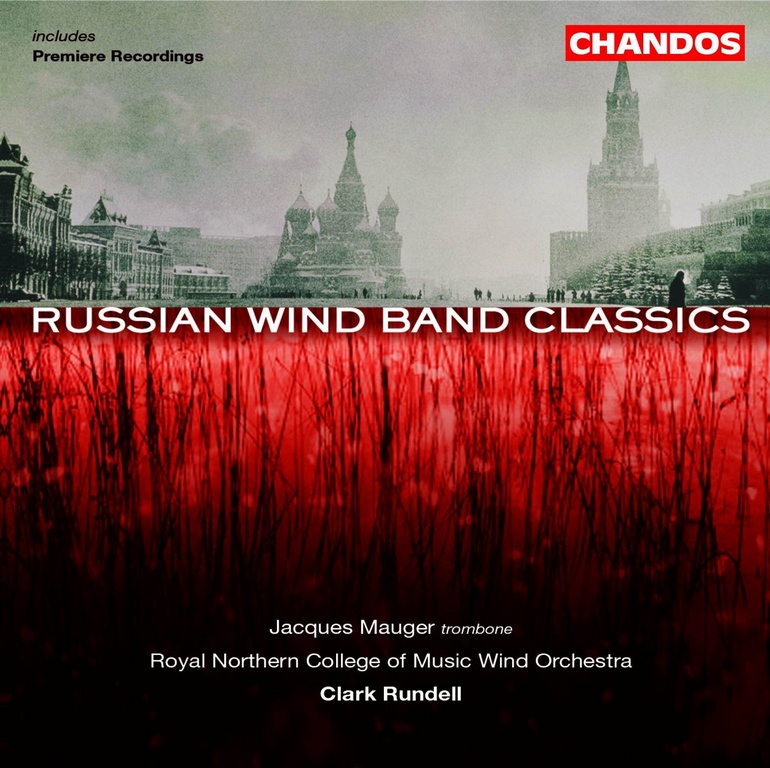
Russian Wind Band Classics


'The Chandos recording has immediacy, good dynamics, and rich Tutti band sonorities. Band music fans definitely need to check this one out.'  --Fanfare

'..the performances get the thumbs up. Chandos' recording engineers have done their work with the necessary bravado.' --International Record Review


'Stravinsky's Circus Polka, Prokofiev's brilliantly balletic Marches for Military Band and a suite from Khachaturian's score for the film The Battle of Stalingrad complete a disc that is as enterprising in repertoire as it is spirited and polished in performance.' --Telegraph

'The band sound truly stunning in the best moments of the score, even through the more hard-driven sections, and on the whole the performances on this disc are highly recommendable. They possess a more transparent and flexible sound than the Stockholm band under Rozhdestvensky, and their trademark lightness (especially noteworthy in the percussion) and crisp articulation give this programme a wonderful shine. If your tolerance for marches and Socialist Realist music is high enough, this could be an enjoyable excursion after all.' --DSCH Journal

'The playing of the RNCM Wind Orchestra is of the highest quality, it's hard to imagine any group could have done it better. Another quality product on the Chandos label' --Brass Review

MP3 320 · 150 MB

Thứ Năm, 10 tháng 5, 2012

Armenian Rhapsody: Khachaturian, Zakarian, Sharafyan


This disc offers a rare opportunity to sample music by Armenian composers, here represented by three works for cello and orchestra.

Naturally Khachaturian is among the selected composers, with his impassioned and expansive Concerto-Rhapsody from 1963 as the disc's opening work. This is followed by Suren Zakarian’s Monograph for cello and chamber orchestra.


A Suite for cello and chamber orchestra by Zakarian's younger colleague, Vache Sharafyan follows. The composer's aim has been 'to create a sense of the perpetual cycle of life and history'. Sharafyan has also arranged the disc's epilogue, an atmospheric arrangement of the song Krunk (Crane). In this version for trio the melody is “sung” by the cello and accompanied by a piano and a duduk, an Armenian double-reed woodwind instrument is often heard in film scores

The UK-based Alexander Chaushian, cello soloist in all of these works, is Armenian by birth, and is supported by the Armenian Philharmonic Orchestra under their principal conductor Eduard Topchjan.

MP3 320 · 160 MB

Thứ Sáu, 23 tháng 3, 2012

Russian Violin Concertos: Khachaturian, Prokofiev, Glazunov


" A striking début sees a young violinist doing full justice to a work she loves… The freshness of her way with the Khachaturian is immediately striking in the chattering figuration of the opening, and she brings a rare tenderness to the lyrical second subject…The clarity of Fischer's performance in the finale brings lightness and sparkle…A unique coupling, superbly recorded." --Gramophone


“...could hardly be more recommendable, with warmly compelling performances from the brilliant young German virtuoso, superbly recorded in full, bright, clear sound...The clarity and freshness of her performance are what immediately strike home”  --Penguin Guide, 2011 edition

“As Julia Fischer explains in the booklet-notes to this, her first CD, she has an abiding love of the Khachaturian Concerto, a work she found impossible to sell to concert-promoters. The freshness of her way with the Khachaturian is immediately striking in the chattering figuration of the opening, and she brings a rare tenderness to the lyrical second subject. The orchestral sound is impressive, too. Though Itzhak Perlman and Lydia Mordkovitch produce a beefier sound, the refinement of Fischer's performance makes it equally compelling. This concerto has claims to be the composer's finest work, claims which the yearning tenderness of the slow movement support.

The clarity of Fischer's performance in the finale brings lightness and sparkle.

In the Glazunov, too, it's the clarity and subtlety of Fischer's playing that marks out her reading. She finds the tenderness of the slow middle section of this one-movement work, and gives an easy swing to the bouncy rhythms of the final section. In the Prokofiev she takes a meditative view of the wistful melodies, the element, she says, that most attracts her, even if she does not quite reach the depths of Kyung-Wha Chung's version.

A unique coupling, superbly recorded, that could hardly be more recommendable.” Gramophone Classical Music Guide, 2010

MP3 320 · 178 MB