Hiển thị các bài đăng có nhãn Shostakovich Dmitri. Hiển thị tất cả bài đăng

Thứ Sáu, 13 tháng 9, 2013

Shostakovich: Symphony No. 5


“Eschenbach's live recording of Shostakovich Five with the Philadelphia is a monumental reading, seeking drama in the work's gaunt architecture rather than its moment-to-moment events.” --BBC Music Magazine, May 2008 ****

“formidable Ondine/Eschenbach/Philadelphia partnership” --Gramophone Magazine


One Five that won... - This release in the successful recording series with The Philadelphia Orchestra and its Music Director Christoph Eschenbach features Dmitri Shostakovich's epic and monumental Fifth Symphony, which has become a signature piece of the orchestra. The Largo movement - one of the most heartrendingly beautiful slow movements written by the composer - and the bombastic Finale of this perennially popular work provide for an entrancing super audio listening experience with the world-renowned sound of The Philadelphia Orchestra. Officially viewed as "the practical creative reply of a Soviet artist to just criticism," this symphony was the Russian composer's mid-career coup - after his music had been politically attacked, he got back into the good graces of both communist officials and the public, who stood and cheered its première in 1937.

An added bonus of this CD is the spellbinding song cycle 'Seven Romances on Poems of Alexander Blok' (1880-1921), making this unusual coupling a unique release; Christoph Eschenbach accompanies on piano the acclaimed mezzo-soprano Yvonne Naef and two members of the The Philadelphia Orchestra.

The Philadelphia Orchestra deservedly takes pride in its long and triumphant association with the music of Shostakovich, beginning with the U.S. premiere of his First Symphony in 1928, conducted by Leopold Stokowski. In fact, through 1973 the Orchestra gave the U.S. and Western premieres of seven of the composer's symphonies variously, as well as the First Cello Concerto, the First Piano Concerto, and the Five Pieces for Small Orchestra. Since Leopold Stokowski led the first Philadelphia performances of the Fifth Symphony in March 1939, the Orchestra has performed the work many times, as well as featured it on domestic and international tours, including performances in Russia under Eugene Ormandy in 1958.

Thứ Năm, 18 tháng 7, 2013

Shostakovich: Cello Concertos


Swedish cellist Frans Helmerson was born in 1945 and began playing the cello at the age of 8. After studies in Goteborg, Rome and London, followed by a debut in Stockholm, his solo career has taken him on countless tours all over Europe as well as the USA, Asia and Russia. He has performed with many of the finest orchestras under the baton of some of today's greatest conductors. He is also renowned throughout the world as one of the great teachers of the cello. He holds professorships at the Musikhochschule in Cologne, where he is based, and at the Escuela Superior de Musica Reina Sofia in Madrid. A regular teacher at the Verbier Festival Academy.


Thứ Sáu, 24 tháng 5, 2013

Shostakovich: Symphonies Nos. 6 & 12


“Superlative standards already set by this team's Shostakovich couldn't afford to slip in a symphony as great as the Sixth. In the first movement, at least, Vasily Petrenko and the Liverpudlians reach new heights of articulation and sonic beauty...In the inferior Symphony No. 12, Petrenko applies his usual standards of well-differentiated articulation and soulful playing” --BBC Music Magazine, December 2011 *****


“Petrenko makes a case that the Sixth could be amongst Shostakovich's most elusive puzzling creations...His solution to the Twelfth: stay out of the way, the RLPO's firepower is good in the telling...profound interpretative insights and stinging orchestral playing.” --Classic FM Magazine, December 2011 ****

“The RLPO woodwinds excel themselves in these gripping readings.” --Sunday Times, 9th October 2011

“Petrenko makes weird and wonderful sense of both...The RLPO’s sense of attack carries all before it, and the eerie Adagio [of No. 12] is traversed with subtlety and finesse. This symphony may not be top-drawer music, but by treating it seriously rather than as the soundtrack for a Bolshevik newsreel, Petrenko and the RLPO do Shostakovich a big favour.” --Financial Times, 8th October 2011 ****

“Petrenko leaves his stamp on the performances through his insight into the characteristics of each work...One particularly impressive feature is the fact that Petrenko seems to have instilled such a “Russian” sound into the players...Petrenko’s sense of the music’s structure is sure, both in the Sixth Symphony and in the Twelfth” --The Telegraph, 7th October 2011 *****

“[The] fierce, anguished first movement is one of Shostakovich's greatest achievements; in this superbly paced performance, it seems to echo the wracked Adagio that begins Mahler's Tenth Symphony. Petrenko and the RLPO are equally impressive in the movements that follow, with wonderfully agile woodwind playing in the Scherzo, and a perfect balance between vulgarity and exuberance in the final Presto.” --The Guardian, 20th October 2011 ****

“[Petrenko]’s not inclined to dwell on the ambiguous political complexities, but his purely musical approach is persuasive. He concentrates on energy and precision, paces each movement astutely, and elicits lean, thrilling timbres from his players.” --The Times, 26th November 2011
****

Chủ Nhật, 19 tháng 5, 2013

Prokofiev & Shostakovich: Violin Concertos


“…the warmly recorded Berlin Philharmonic and Rattle provide a tangibly symphonic framework for the Shostakovich, highlighting much interesting detail and colour. Chang is in superb form projecting particularly high-voltage playing in the Scherzo and Finale of the Shostakovich and in the second movement of the Prokofiev.” --BBC Music Magazine, April 2006 ****

Gramophone Magazine Editor's Choice - May 2006


“She can shade her violin a thousand ways, and with lightning speed too… this is a CD crackling with excitement” --The Times

“The soloist is fortunate to be partnered by Sir Simon Rattle and his Berliners. …this is a reminder of his unambiguous excellence as a concerto accompanist. Sarah Chang… plunges excitedly into climactic passages, determined to give her big dark sound a scorching edge, The technical control is mightily impressive... this is great playing, perhaps the best she has yet given us.” --Gramophone Magazine, May 2006

Thứ Sáu, 10 tháng 5, 2013

Shostakovich: Music for viola & piano


“Lawrence Power and Simon Crawford-Phillips find a much greater variety of resonances in the score than is often the case. They embark on a musical narrative of epic proportions...For the most part, however, Power and Crawford-Phillips place most emphasis on the more grotesque elements of the writing, as if to suggest the composer recapturing the energetic satirical style of his earlier career.” --BBC Music Magazine, June 2012 ****


“Power's performance is particularly engaging in the witty, sardonic middle movement...if not the very last word on the Sonata, this is still a finely played programme that can be recommended with confidence.” --Gramophone Magazine, April 2012

“Such is the extraordinary nature of this sonata that it does not respond to any kind of superficial treatment, and Power's performance is, on balance, the most penetrating I have heard...in the Op. 147 Sonata Power is to be preferred above his rivals: there is an 'inner' feeling to his playing (and to that of his partner) which his competitors do not quite equal” --International Record Review, February 2012

Thứ Ba, 13 tháng 11, 2012

Shostakovich, Liszt & Prokofiev: Piano Concertos No. 1


“With this scintillating and eagerly awaiting recording, 19-year-old Lise de la Salle makes her concerto debut on disc.…performances are of the highest quality.” --Gramophone Magazine. Disc of the Month - April 2008

“Everything about De la Salle's playing is astonishingly mature; technical challenges are met and never highlighted and she is always intent on seeking out the poetry beneath the teeming surfaces. This is distinguished piano playing.” --The Guardian


Expectations fully met in the glittering playing of a remarkable young pianist

With this scintillating and eagerly awaited recording, 19-year-old Lise de Ia Salle makes her concerto debut on disc. Once again her performances are of the highest quality, her rushes of adrenalin balanced by her precise calibration and control. Even with front-runners such as Argerich and Hamelin in the Shostakovich she holds her own, combining her freshness and ebullience with many personal and enchanting touches.

In the Liszt she is fearless in the face of every treacherous obstacle, but is also romantic and free-wheeling in the Quasi adiigio. The Allegro vivace is acutely focused rather than given with a weaker if more familiar balletic grace, and in the finale de La Salle's ultra-brilliance and vivacity are very much her own. Indeed, she makes you imagine Liszt's delight if he had been able to hear such youthful aplomb.

Again, de la Salle is off like the proverbial greyhound at Prokofiev's first poco phi mosso yet she also captures all of the central Andante assai's bittersweet, faux romanticism. By her own confession, and unconsciously echoing Arthur Rubinstein, de la Salle believes that artists should nourish their playing with outside interests, with life itself, if it is to do more than sound sterile or self-absorbed, and all her performances on this very special disc refreshingly confirm her philosophy. She is admirably recorded and partnered by Lawrence Foster, while trumpeter Gthor Boldoczki joins in her sense of fim and mischief in the Shostakovich. --Bryce Morrison, Gramophone [4/2008]


Thứ Hai, 22 tháng 10, 2012

Duo


"Put on your headphones, close the door and soak in these direct-connection performances of Schumann, Brahms, Debussy and Shostakovich by pianist Grimaud and cellist Gabetta. This is terrific." --Mercury News, September 2012

". . . the duo's playful work on Schumann's "Drei Fantasiestücke" bears out both Grimaud's assessment and the pair's shared sensibilities. Brahms' Sonata for Piano and Cello No.1 in E minor, though possessed of more gravitas, is more lightly dealt with than I've heard before, while they bring a questing spirit to Debussy's Sonata for Cello and Piano in D minor,


Gabetta's robust pizzicato work in the second movement and Grimaud's animated runs in the closing section both evoking the early jazz influence of the late Romantics." --Independent, October 2012

Helene Grimaud (piano) & Sol Gabetta (cello)

Two of today's most passionate and inspirational artists join forces in the recital programme that brought audiences to their feet at the Menuhin Festival in Gstaad in Summer 2011. The chemistry between Hélène Grimaud and Sol Gabetta left critics and audiences nothing short of euphoric and this first duo recording captures the revelatory magic of their collaboration

The album reprises the same programme the duo performed in Gstaad:

Robert Schumann’s Fantasiestücke, Claude Debussy’s Sonata for Cello and Piano in D minor, Johannes Brahms Sonata for Cello and Piano No.1 in E minor and Dmitri Shostakovich’s Sonata for Cello and Piano.

Hélène’s recordings have been best-sellers on the Yellow Label with more than 800,000 units sold altogether to date. Sol is also a best-selling, chart-storming artist, who is regarded as one of the great cellists of our day.

Thứ Bảy, 6 tháng 10, 2012

Rachmaninov, Shostakovich & Lutoslawski


Ashkenazy's 20-year-old Swedish protégé proves worthy of the maestro's patronage. On the evidence of this disc he is a well-balanced musician with his heart and fingers in the right places, and his chosen programme is a stimulating one.

“Jablonski, whose credentials include having been voted best jazz drummer in Sweden at the age of seven (!), revels in its high jinks, and Ashkenazy and the orchestra just manage to hang on to his coat-tails... an exciting end to an admirably played and recorded disc.” --Gramophone Magazine


Jablonski's Rachtnaninov perhaps commands more respect than excitement, but it won my respect before I was aware of his youth. Generally lucid and level-headed, his limitations show up at extremes of the character range. In particular, he does not yet have the knack of retaining communicative intensity in quiet lyrical playing, and a number of variations, such as the first Dies irae from 322", are inclined to sit back on their haunches. Some of his loudest chords are accompanied by foot-stamping, and in the famous Eighteenth Variation Jablonski's singing tone, pleasant though it is, lacks a degree of richness—the orchestra's entry at 15'55" sounds as though taken from a different, more emotionally committed take. That said, he is a very musicianly player, and the RPO's attentive contribution and Decca's superb recording help to make this one of the more satisfying accounts on record.

The Shostakovich concerto is a good choice, not just as a near contemporary of the Paganini Rhapsody, but as a bridge to the zany world of Lutoslawski. It receives a fluent, well-judged and idiomatic performance with every note in place and some lovely trumpet playing from Raymond Simmons. This is a valuable complement to the manically explosive Kissin on RCA; the even younger Russian's brashness did nothing for MEO but it strikes me as a perfectly valid response to the 'low-art' origins of so many of Shostakovich's ideas.

Lutoslawski's Paganini Variations are a 1978 orchestration of the familiar 1941 two-piano work. I had not heard this version before and was instantly captivated. Jablonski, whose credentials include having been voted best jazz drummer in Sweden at the age of seven (!), revels in its high jinks, and Ashkenazy and the orchestra just manage to hang on to his coat-tails—an exciting end to an admirably played and recorded disc. -- Gramophone [12/1992]


Thứ Hai, 1 tháng 10, 2012

Shostakovich: Cello Concerto No.1, Cello Sonata


“Chang brings clear-sighted belief to everything she touches. Her range is generous indeed, from barely-audible ghostly voices to high-octane drama… What wins me over without reservation is the superlative partnership with Pappano and the LSO on peak form. ...Pappano doubles as Chang's partner in the accompanying Sonata, taking on the fiendish quick-change artistry of the piano role with deadpan aplomb.” --BBC Music Magazine, May 2006 *****


“Adopting in fast music speeds a notch swifter than the norm, Chang combines raw emotion with a structural grip that, in its way, is even more remarkable in one so young. …the LSO is right there with her, as deeply attentive in the slow movement as in the composer's astringent, nagging brand of fireworks elsewhere in the piece.” --Gramophone Magazine, May 2006


Thứ Sáu, 21 tháng 9, 2012

Franck & Shostakovich: Violin Sonatas


“The Khachatryans, brother and sister, make a formidable team. The recording is exceptional, too: finely balanced and with a wide dynamic range. The sound is so beautiful that one wondered, at moments during the Shostakovich, whether a harsher, more direct sonority might paint this dark work's bleak sound-picture more accurately, though it must be admitted that this duo is able to give the maximum intensity and force (as they clearly do in the ferocious second movement) while maintaining top tonal quality.


At all events, this Shostakovich performance is extremely impressive, the technical difficulties seemingly of no account, and the vast design of the final passacaglia compellingly sustained with playing that ranges from precise and delicate, through mysterious and poetic, to the highest degree of force and energy (in the two solo variations).

There's outstanding playing, too, in the Franck, especially in the first movement, where the tonal range of Sergey Khachatryan's lyrical phrases gives them a powerful emotional pull. However, the performance as a whole doesn't quite fulfil this initial promise. The second movement lacks the passionate drive that some bring to it: it's a mistake, too, to allow the dynamic level to drop at the appearance of the soaring second theme – Franck only marks a diminuendo some bars later.
In the following Recitativo-Fantasia, the composer again provides many clues; by virtually ignoring his poco accels and molto lentos the Khachatryans miss a crucial improvisatory element. It remains an enjoyable performance, however – very accomplished sonata-playing.” --Gramophone Classical Music Guide, 2010


Thứ Sáu, 7 tháng 9, 2012

Shostakovich & Britten: Cello Concerto No.1, Symphony for Cello and Orchestra


“both these virile, confrontational works benefit from [Moser's] terrific energy and impetuous attack. He slices into the Shostakovich at speed...His ringing, acrobatic cadenza and urgent Allegro make this an exciting performance, the equal of any. The WDR Symphony Orchestra have two vital ingredients to bring to the Britten Cello Symphony: fabulous horns and lively timpani.” --BBC Music Magazine, July 2012 *****


“[Moser is] a truthful guide, hitting timings very close to the composer's own, and keeps a judicious balance between discipline and feeling. In the long cadenza he typically finds time for thoughtful expression, not just a display of technical skills. The darker resonance that envelops this performance comes largely from the more mellow orchestral playing” --Gramophone Magazine, April 2012

“Moser's formidable technique surmounts every obstacle with apparent ease...but conductor Pietari Inkinen is seldom convincing...Moser's reading of the Shostakovich cello concerto is again tautly argued and concise, with classy orchestral support and an especially good solo horn player” --International Record Review, June 2012

Thứ Bảy, 1 tháng 9, 2012

Russian Cello Sonatas


“The meaty piano parts in the Rachmaninov and Borodin benefit hugely from [Sudbin's] near-orchestral range and depth, and his sculptor's sense of form and phrase. Not that he outshines cellist Alexander Chaushian, who displays a deeply instinctive connection with this repertoire...This is a near-ideal performance of Rachmaninov's magnificent work that stands alongside those by the greatest.” --BBC Music Magazine, February 2012 ****/*****


“Chaushian and Sudbin shows that it is actually possible to deliver Rachmaninov's Sonata full-throatedly without making it sound like a piano concerto with cello accompaniment. And they demonstrate equally that Shostakovich's Sonata does not need hysterical exaggeration of its subtexts in order to be richly communicative.” --Gramophone Magazine, August 2011

“Chausian and Sudbin provide a majestic overview of chamber-style sensitivity. Every phrase is beautifully sculpted, Sudbin subtly tames Rachmaninov's swirling solo line, and Chaushian plays with a bewitching restraint and technical clarity that works wonders, especially in the rarely-heard Borodin Sonata.” --Classic FM Magazine, June 2011 ****

“There is no lack of personality and temperament, and the bigness of [Chaushian's] sound contributes to the music's symphonic aspirations...no one plays these sonatas quite like Russian performers do. Chaushian is no exception, bringing interpretative insight and native soulfulness into play with his technical mastery...His basic sound is appealingly buzzy - that is to say, human.” --International Record Review, May 2011

Thứ Sáu, 24 tháng 8, 2012

Shostakovich: Preludes & Fugues for piano (24), Op. 87 (complete)


“Few pianists have shown themselves to be so sensitive to music which is the response of a complex visionary to the corrosive banality of Soviet life at the time...[Melnikov] responds to all this with an impeccable all-Russian mastery and with a poetic commitment few could equal.” --Gramophone Magazine, August 2010

“In this muscular, virile account, [Nikolayeva's] fellow Russian Alexander Melnikov makes you wonder why these works are considered monotonous or didactic. In his virtuosic hands, each one glints.” --The Observer, 25th April 2010


Radio 3 CD Review
Critics' Disc of the Year - December 2010

BBC Music Magazine Awards 2011
Instrumental Award Winner

“Melnikov unquestionably gives an impression of freshness and daring, as if he's discovering the music for the first time...Certainly one's bound to feel, listening to such superb playing, that this is indeed one of the greatest contrapuntal cycles since Bach. Overall, then, a magnificent achievement.” BBC Music Magazine, June 2010 *****

“Melnikov is consistently alert to (and in control of) the music's dizzying variety of idioms and tones of voice...[He] conveys the scope of the collection as a totality with such consistent penetration and invention that this expertly engineered set can be enthusiastically endorsed for anyone seeking a complete recording” --International Record Review, October 2010

Thứ Năm, 19 tháng 7, 2012

Shostakovich: Symphony No. 10


“The Tenth is a symphony into which many have been tempted to read parallels with Shostakovich's life...The refreshing thing is that Petrenko treats it as a great symphony in its own right...All dynamics and metronome marks are scrupulously observed, but details never impede the progress of this rippling, human tragedy.” --BBC Music Magazine, December 2010 *****


“Petrenko's Shostakovich cycle goes from strength to strength...[his] instinct for pacing enables the power of Shostakovich's symphonic design to register to maximum effect. If there has been a finer account of the Tenth in recent years, I confess I must have missed it.” --Gramophone Magazine, January 2011

“Petrenko and the RLPO have achieved a triumph. The orchestral playing is ripe, detailed, lithe, concentrated and intense. Petrenko has full measure not only of the symphony’s overarching architecture but also of the individual facets that make it such a fascinating conundrum.” --The Telegraph, 5th November 2010 *****

“Petrenko’s masterly performance builds inexorably from the ruminating brooding of the low strings and lamenting wind solos to the most shattering climax, as the full orchestra erupts in howls of anguish and rage. His whipcrack tempo for the scherzo is one of the most menacing I can recall...A thrilling performance.” --Sunday Times, 21st November 2010 ****

“Petrenko shapes the long first movement - nearly 23 minutes - very well, paying close attention to phrasing and emphases...The orchestra plays for all its worth at the climaxes...The 'Stalin' Allegro is as brutal as you will find anywhere, and there's plenty of excitement and wit in the Finale.” --Classic FM Magazine, January 2011 ****

“Petrenko and his band show us that the music has greater timbral interest than we often imagine...there's barely a page of the symphony where we don't hear some telling orchestral detail...Solo work is subtle throughout, especially in the symphony's more introverted passages.” --International Record Review, December 2010

Chủ Nhật, 15 tháng 7, 2012

Shostakovich: Symphonies Nos. 5 & 9


 “…Petrenko's interpretation of the Ninth unleashes the full ferocity of threatening developments and proves that the Moderato, however spare, remains as eloquent a slow movement as any in Shostakovich's works. Superb playing all round, too, not just from the spotlit bassoon in the crucial recitative but also from first oboe, piccolo and the pairs of subtly phrasing clarinets. In the Fifth Symphony, the principal flautist is representative of Petrenko's care in making sure every phrase sounds absolutely right for the context...” --BBC Music Magazine, December 2009


 “Petrenko's… Fifth is remarkable for the tight discipline and detailed characterisation of musicians plainly on the up. The five-movement Ninth has sufficient energy and muscle to make it more than a mere divertissement. …Petrenko takes his time with the second movement, imparting almost too much aching reflectiveness, notwithstanding the loveliness of the playing. ...a whizzing Presto, demonstrating just how far the RLPO's corporate virtuosity has developed in a relatively short time. The finale puts on a cartoonish burst of speed at its pompous apex. Though you may not like this or that effect, the performance as a whole is deft and undeniably persuasive.” --Gramophone Magazine, December 2009

“Petrenko’s strategic planning pays off with terrific tension, frightening crescendos and sharply defined emotional moods...The slow movement shivers in desolation. In the finale, woodwinds bring tendrils of hope; then comes the moving, contemplative coda. The series’ best release so far.” --The Times, 2nd May 2010 *****


Thứ Tư, 20 tháng 6, 2012

Shostakovich & Tchaikovsky: Trios


Wow! This is music making on a cosmic scale. You may hear some jaded critic offer up the following generic comment about this release: "These three players, gathered together for only the second time, naturally can't equal the subtle give and take of more established chamber ensembles." Bull. All three artists rank among the most inspirational and experienced chamber players of our time, and here they set the notes on fire in performances of shattering intensity, improvisational spontaneity, and (in the Tchaikovsky) Herculean grandeur.


Argerich's performance of the concerto-like piano part of the Tchaikovsky Trio is especially impressive; she seems to know instinctively when to dominate the proceedings and when to let her partners take over; and the final "Theme and Variations"--a huge movement half an hour in length--seldom has sounded so cohesive and meaningful. As to the Shostakovich, well, what can I say? This is one of the most profoundly moving experiences in music, and how well this trio knows it!

The three players find the perfect tempo for the third movement Passacaglia, then build the tragic finale as inexorably as fate itself. These beautifully recorded performances are special in every way, as much an event as the concert itself must have been. --David Hurwitz, ClassicsToday.com

MP3 320 · 172 MB

Thứ Ba, 12 tháng 6, 2012

Shostakovich: Violin Concertos


“Born in 1985 in Yerevan, Armenia, Sergey Khachatryan… is a real rival to Maxim Vengerov in this repertoire: the Shostakovich No 1 is his party piece as well. Interpreting it with a less unyielding intensity, he too satisfies its demands as few have done since the great David Oistrakh. Rock-solid intonation is combined with wonderfully sweet tone.” --Gramophone Magazine

“Though still only a teenager, the Armenian-born Sergey Khachatryan is a shining beacon among today’s young violinists, a persuasive interpreter with a musical personality all his own.” --The Independent


“Do we need another pairing of the Shostakovich violin concertos? The answer is an unequivocal yes when the playing is as sensational as this.

Not just a preternaturally gifted teen, Sergey Khachatryan is a real rival to Maxim Vengerov in this repertoire: the Shostakovich No 1 is his party piece as well. Interpreting it with a less unyielding intensity, he too satisfies its demands as few have done since the great David Oistrakh.

Rock-solid intonation is combined with wonderfully sweet tone.

Kurt Masur's accompaniment is characteristic of him. You'll hear the important tam-tam contributions in the first movement, which Rostropovich and/or his sound team fail to clarify, but you shouldn't expect minatory timp thwacks when the third movement passacaglia launches with kapellmeisterish restraint. Masur's lack of theatricality puts the focus on the way the music is put together. One drawback hereabouts is a microphone placement that captures soloistic sniffles, distracting if you do your listening on headphones.

The finale is aptly lighter in style, with a dash to the finishing-line perfectly calculated to win prizes and bring the house down.

Authoritative booklet-notes portray the companion concerto as something of an also-ran, an impression the performance perhaps does too little to allay. There are some exquisite effects but Vengerov, Rostropovich and the LSO take us to another, darker place. In Paris the accompaniment has too much politesse and is backwardly balanced. Strongly recommended even so.” --Gramophone Classical Music Guide, 2010

MP3 320 · 152 MB

Thứ Bảy, 2 tháng 6, 2012

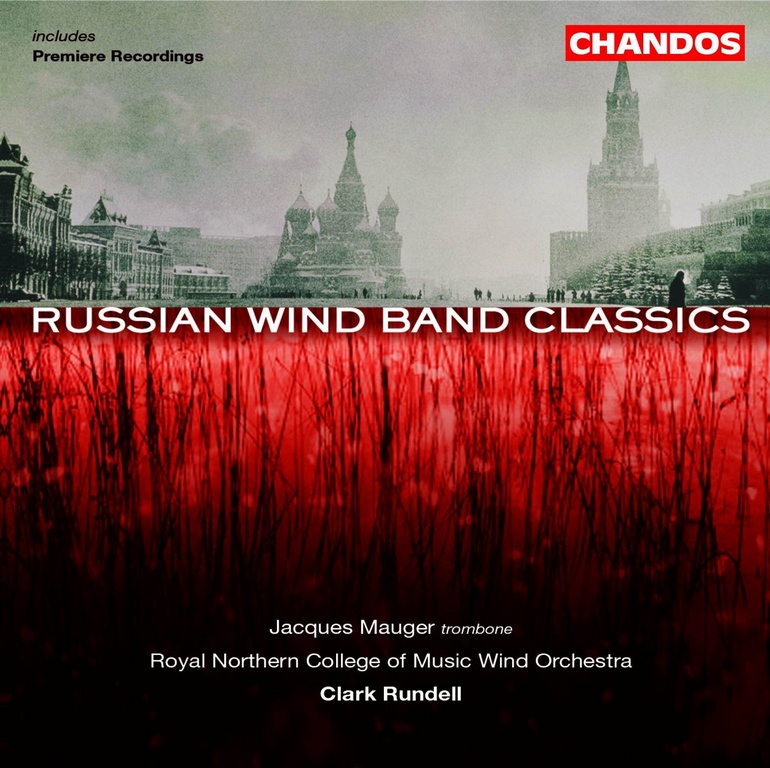
Russian Wind Band Classics


'The Chandos recording has immediacy, good dynamics, and rich Tutti band sonorities. Band music fans definitely need to check this one out.'  --Fanfare

'..the performances get the thumbs up. Chandos' recording engineers have done their work with the necessary bravado.' --International Record Review


'Stravinsky's Circus Polka, Prokofiev's brilliantly balletic Marches for Military Band and a suite from Khachaturian's score for the film The Battle of Stalingrad complete a disc that is as enterprising in repertoire as it is spirited and polished in performance.' --Telegraph

'The band sound truly stunning in the best moments of the score, even through the more hard-driven sections, and on the whole the performances on this disc are highly recommendable. They possess a more transparent and flexible sound than the Stockholm band under Rozhdestvensky, and their trademark lightness (especially noteworthy in the percussion) and crisp articulation give this programme a wonderful shine. If your tolerance for marches and Socialist Realist music is high enough, this could be an enjoyable excursion after all.' --DSCH Journal

'The playing of the RNCM Wind Orchestra is of the highest quality, it's hard to imagine any group could have done it better. Another quality product on the Chandos label' --Brass Review

MP3 320 · 150 MB

Thứ Tư, 2 tháng 5, 2012

Shostakovich: Piano Trios & Songs


'One might be forgiven for wondering whether the market for this particular repertory has already reached saturation point. Fortunately such concerns are tempered when considering the Florestan Trio's hugely impressive track record and their unwavering capacity to shed new light on familiar repertory … The Florestans fully capture the youthful adour and impetuosity of the First Trio. They are in equally inspired form in the Seven Blok Romances providing mesmerising and powerfully etched accompaniments to Susan Gritton's achingly beautiful singing' --BBC Music Magazine


'This isn't the first CD to group Shostakovich's two piano trios with his late Romances to poems by Alexander Blok but, for the freshness and excellence in every aspect of performance and production, it would be my pick' --Gramophone

'A recording to cherish then from a trio of musicians who, from one recording to the next have always played to the highest standards' --Classical Music Sentinel

'The Florestan Trio performs with terrific presence, precision, immediacy and palpable atmosphere. They delve beneath the surface to find and project the nuances of expression that lend these works their special flavour of soul searching. Even the First Trio – a work dedicated to one of Shostakovich’s loves, Tatyana Glivenko – seems to inhabit a world coloured more by nostalgia and anxiety than out-and-out ardour. In the Second Trio these feelings are intensified even further' --The Telegraph

MP3 320 · 134 MB


Thứ Sáu, 20 tháng 4, 2012

Shostakovich: Piano Concerto No. 1, Etc

BBC Music Magazine Awards 2008 - Orchestral Award Winner
CD Review - Critics Disc of the Year - December 2007

“This excellent disc, consisting of live performances from the 'Progetto Martha Aregerich' at the 2006 Lugano Festival, has a spontaneity and sheer pleasure in music-making one doesn’t often hear in Shostakovich.” BBC Music Magazine, November 2007 *****

“Recorded at the 2006 Lugano Festival, Argerich's virtuosity is breathtaking. There's also a vivid, dramatic performance of the Piano Quintet.” --Gramophone Magazine, November 2008


“Argerich's 1994 DG reading of the Concerto for Piano, Trumpet and Strings is already a benchmark version among modern recordings, complementing the composer's own technically fallible yet still indispensable 1958 account. But now there is a more natural flow in the slow movement, some previously slightly forced rubati are smoother, and although the textures are a fraction more richly pedalled, as often needs to be the case for projection to a big audience rather than the microphone, there is no more than an infinitesimal loss of clarity.

So if anything Argerich's playing has the tiniest of edges even over her former self. More decisively, Sergei Nakariakov brings an extra dash of wit and soloistic presence to the trumpet part, not to mention an astonishing feat of (circular?) breathing in the slow movement. There is a fraction more flair from orchestra and conductor too, while the recording brings everything further forward, so that the electricity of the playing crackles around the room.

The two-piano Concertino is a little piece of high-quality Gebrauchsmusik for the then 16-year-old Maxim Shostakovich son to romp around with; Argerich and Zilberstein give it a wonderfully characterful rendition.

Much of the Piano Quintet also emerges as one has only always dreamt of hearing it – vivid from moment to moment, yet with a long musical line and dramatic overall conception. Occasionally the nervous energy of the playing is too much of a good thing, as in the tricky bridge from Intermezzo to finale – from darkest profundity to deceptive easy-going cheeriness – and as in the piano's first statement of the fugue theme in the second movement. So, recommend ed alongside the safer Ashkenazy/Fitzwilliam recording rather than above it. As for the disc as a whole: a sure-fire winner.” --Gramophone Classical Music Guide, 2010

MP3 320 · 144 MB